

☆ Yσɠƚԋσʂ ☆
- 9.34K Posts
- 8.88K Comments


There was no mass support. The US was cultivating a proto color revolution, a formula that’s been used time and again since then. What we do know is that in cases where there was no crackdown on Western funded reactionaries, then we got outcomes like in Chile. Thinking that this was some organic movement is frankly absurd. Also, can read up on precisely the tactics used, and how they have direct lineage in nazi propaganda https://november8ph.ca/psychological-warfare-in-the-strategy-of-imperialism-v-l-artemov/

 4·11 hours ago
Exactly, it’s obviously not done for any sort of humanitarian reasons.
Oh so what happened was that the banderites captured some DPRK soldiers and made a secret deal with occupied Korea to send them over. Then the green goblin started bragging about it which created tensions with DPRK, so occupied Korea is furious about it. And they got a non apology from the banderites, so apparently that was the last straw even for them.
 10·22 hours ago
isn’t it SpaceXSI now 🤣
The funniest part about the whole tankie thing is that it was coined by British reactionaries in response to the suppression of a counter-revolution in Hungary, which has now been revealed to be a CIA op.
Wrong, liberalism is fundamentally a right wing ideology. Full stop. https://dialecticaldispatches.substack.com/p/the-dialectics-of-domination
The whole >90% of territory never saw a foot of German soldier was not where most of the destroyed urban housing stock stood. The war destroyed over 1,700 towns and 70,000 villages, which was roughly half the urban housing stock in the most populated and industrial regions, and left about 25 million people homeless.
Many houses were built by workers in their spare time after work, on a land granted by the state and using construction materials provided by the factory or plant they worked at, but that was a supplement to state reconstruction, not proof that war ruin was secondary.
The barracks aging is precisely what created the need for khrushchevkas in late 50s and early 60s onwards. Then brezhnevki with some improvements over bare minimal comfort of previous gen, and eventually from 70s onwards to the end of soviets the massive prefab took hold. There were countless experimental projects at different times and in different configurations, from 3 storey alpha builds of Khrushchevkas to Kyiv’s Podil 4 blocks project of late 80s, but all of it was a response to the war-created housing deficit, not a response to industrialization alone as you falsely claim.
Aggressive industrialization wasn’t the fundamental explanation for the scale and duration of the postwar housing construction program. Wartime destruction was the main driver.
It really helps to actually learn about the subjects before you start braying about them.

Seriously, I find there are just a handful of tropes libs regurgitate like trained parrots. You really can just have a templated response to them.
Oh, they cultivate anarchists domestically to do that.

Western media regularly calls China and DPRK authoritarian.


“A revolution is certainly the most authoritarian thing there is; it is the act whereby one part of the population imposes its will upon the other part by means of rifles, bayonets and cannon — authoritarian means, if such there be at all; and if the victorious party does not want to have fought in vain, it must maintain this rule by means of the terror which its arms inspire in the reactionists. Would the Paris Commune have lasted a single day if it had not made use of this authority of the armed people against the bourgeois? Should we not, on the contrary, reproach it for not having used it freely enough?”
― Frederick Engels
it’s mostly an easy way to run native code in the browser
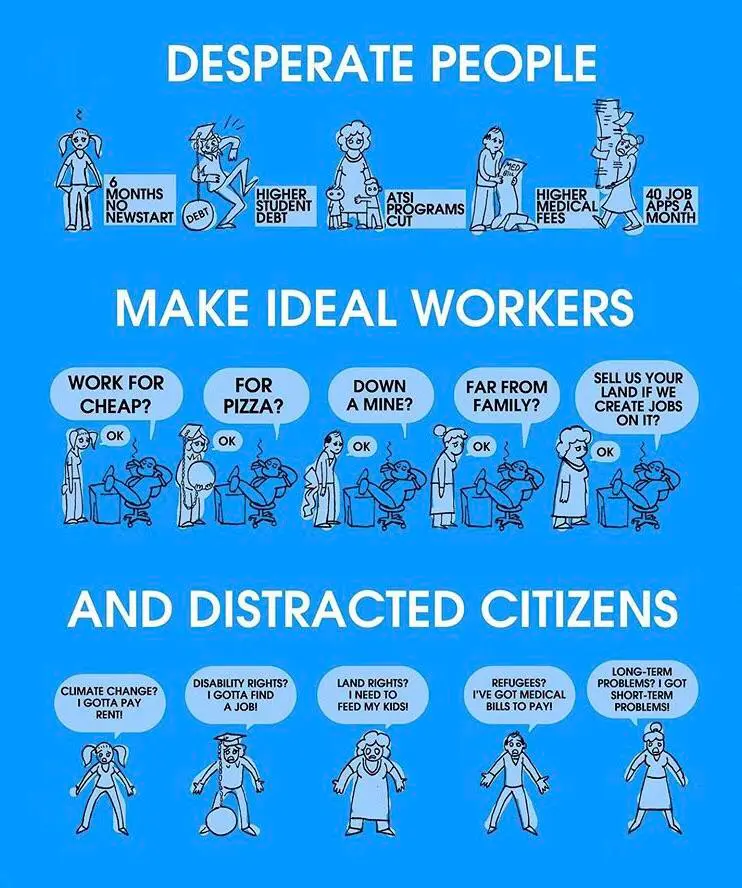
I mean, either you have a state that actually spend the resources to house people, or you get that.
The term authoritarianism is utterly meaningless because all governments rely on coercion to maintain their authority. The state is fundamentally an instrument that’s used by the ruling class to maintain its dominance. The whole notion that political systems can be neatly categorized into authoritarian or democratic binaries is deeply infantile.
The reality is that every government derives its authority from its monopoly on legal violence. The ability to enforce laws, suppress dissent, and maintain order is derived from control over police, military, and judicial systems. Whether a government is labelled authoritarian or democratic, the fundamental basis of its power lies here. Therefore, the only meaningful questions to ask are which class interests it represents, and to what extent can it be held accountable to them.
What ultimately matters is which class controls the institutions of state violence. In capitalist democracies, the government represent the interests of the economic elites who fund political campaigns, own media outlets, and control key industries. Western public lacks the mechanisms necessary to hold the government to account, and the ruling class is disconnected from the broader population. That’s precisely what’s driving political discontent all across western sphere today.
Ask yourself is guzzling western propaganda uncritically good, on the whole no is bad.
It’s true, this is a much better solution https://en.wikipedia.org/wiki/List_of_tent_cities_in_the_United_States






I mean Europeans are already buying most of their diesel from the US aren’t they?