

31·
23 days agoCan you afford to upgrade? Then No.
Can you afford to upgrade? Then No.

LLMs perform poorly when assisting humans with medical diagnostic, study blames human participants for not working with them.
They did repay him however, he gets his own prophecy in Isaiah 44:28 saying how he’s definitely God’s special boy. Not too many can claim that

The furry paw of diplomacy. Now the nerd in me wants to see a graph of the Panda Index as a measure of Chinese opinion about other countries It’s the cuddly side of a relationship in contrast to darker clouds on the horizon.

Manor Lords. As a game, pretty much ticks all the things mentioned in the article.

Community edition would have made sense if there was a official commercial version that supported things like group policy etc. But features like that are already in the open source release, there’s very little that a corporate version could add. It even does sharepoint via webdav.

Why slow rotating physical storage ? It not like the AI models generate anything worth retaining in the long term. I assume they are in just running out of ssds so will buy any old drive
Definitely students need more sleep, right through to university. According to this study humans are still adolescent from 9 till 32. Scientists identify five ages of the human brain over a lifetime Want to protect human potential ? That would be a good starting point. It’s sensible even from a purely utilitarian profit focused view of study and work.

Open shell is a helpful solution that replaces some of the problems in the windows UI at least for the start menu.
It’s pretty easy to customize most elements for the style you prefer and no adverts.

Open shell is a helpful solution that replaces some of the problems in the windows UI at least for the start menu.
It’s pretty easy to customize most things.
You would think with all the money from data centers their support for enterprise GPU use would be great. But as someone who’s tried to install it, I can confirm it’s really basic and the documentation is sparse.

So he’s talking about the Christian version of God but what specific variant. There’s lots to select from you know. Do other Abrehamic religions get a pass or just his present kind of evangelical nuttery.

So that’s what AI snooping is called now? How is it better if there are Microsoft employees occasionally looking over your shoulder.

I think your right to be cautious about the timing, cats are very territorial and can take a couple of months to trust that a new place really belongs to them. I guess the breed and personality of the kitten would be the key to harmony because your present cat is already mature. If they can coexist then they will eventually accept one another but seperate feeding areas help. They will try very hard to invade the others space on day one so it can be job to keep them separate.
With the leatherworking example this article below provides details and source. Except for the asking a leatherworker bit which seems inaccurate. The scientists actually made new experimental copies of the tools to confirm what the bones were used for based on the wear to surfaces. https://www.theguardian.com/science/2013/aug/12/neanderthals-invented-tool-leather-lissoir. They did note that "Similar tools, called slickers or burnishers, are still in use by leather workers today, meaning the instruments may be the only known examples of modern tools that owe their existence to our ancient Neanderthal relatives.
“There’s a good case to be made for Neanderthals inventing this one aspect of modern human technology,” said Shannon McPherron at the Max Planck Institute for Evolutionary Anthropology in Leipzig. “It’s the first time we’ve seen Neanderthals use bone in a way that uses its unique properties.”
“These bone tools are identical in outline, profile, and use-wear to lissoirs. Lissoirs are known from the early Upper Paleolithic of western Europe including the Châtelperronian, Proto-Aurignacian and Aurignacian but are also found in the late Upper Paleolithic through to historic and modern time periods Lissoirs have a standardized shape and vary in size depending on the species used; they are an effective tool for producing and smoothly shifting pressure over a small area”
Our boy won’t talk to humans. He has appointed the girl as his spokescat and will headbutt her till she gets human attention. If she is sleeping elsewhere he gets quite confused how to ask for food. Why can’t they just read my ears then??!

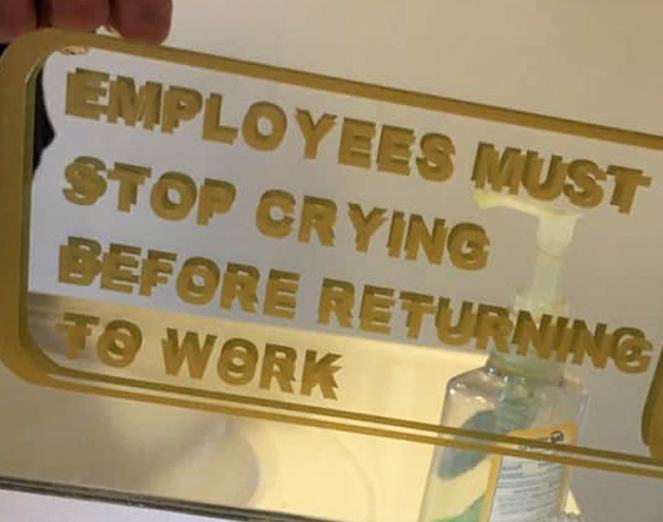
I was thinking, what is the closest thing humans have made to a LLM? Basically it’s a corporation. Words go round and round and at some point decisions are made. Yet how good are the guardrails for corporate activities. We have been struggling for generations to stop corporations being amoral or feral, and they have people at the top that can be held accountable. At least in principle. So what of AIs which reflect both the best and worst human responses but do so chaoticly. Putting that tech in charge of anything is foolish at best.