
42·
2 days agoThey added telemetry. 100% of responses had internet access.
They added telemetry. 100% of responses had internet access.
Yup, that “what can I start in 10min” question really ruins a lot of productivity.
I don’t think that is true. Not much at Google really bought into the UUID hype. At least not for internal interfaces. But really there is no difference between a UUID v4 and a large random number. UUID just specifies a standard formatting.
It is true, don’t do it.
Even at huge companies like Google, lots of stuff was keyed on your email address. This was a huge problem so Google employees were not allowed to change their email for the longest time. Eventually they opened it up by request but they made it very clear that you would run into problems. So many systems and services would break. Over time I think most external services are pretty robust now, but lots of internal systems still use emails (or the username part of it) and have issues.
IIUC Google accounts now use a random number as the key. But there are still places where the email is in use, slowly being fixed at massive cost.

It depends a lot on the hash functions. Lots of hashes are believed to be difficult to parallelize on GPUs and memory hard hash functions have different scaling properties. But even then you need to assume that an adversary has lots of computing power and a decent amount of time. These can all be estimated then you give yourself a wide margin.
Yeah, but my point is that I use my master password enough that random characters are still memorable while being faster to type. For me personally there isn’t really a use case where the easier memorability is worth the extra characters to type. But of course everyone is different, so it is good that this system is laid out for them with a great guide.
Yeah, that is what I meant by “strength of the hash”. Probably should have been more clear. Basically the amount of resources it takes to calculate the hash will have to be spent by the attacker for each guess they make. So if it takes 1s and 100MiB of RAM to decrypt your disk it will take the attacker roughly 1s and 100MiB of RAM for each guess. (Of course CPUs will get faster and RAM will get cheaper, but you can make conservative estimates for how long you need your password to be secure.)
It is a good technique to be sure, but I haven’t found it useful in my everyday life. In practice 99% of my passwords are stored in my password manager. I only remember like 3 passwords myself. For those I want them to be easy to type as I do it semi-regularly (whenever I turn on my computer or phone, my phone sometimes re-verifies, …). These may be slightly easier to remember but end up being much longer. I find that I don’t have issues remembering the 3 passwords that I actually regularly type.
In fact I recently switched my computer passwords to be all lowercase, just to make it easier to type. I’ve offset this reduced entropy by making them longer (basically shift+key is similar entropy to key+key and easier to type, especially on phones or on-screen keyboards).
The recommended 6 words produces incredibly strong passwords. The equivalent with all lowercase would be 16.5 characters. Personally I went for 14 characters and in my threat model that is very very secure. But this will also depend on your attack model. If it is a disk encryption password or other case where you expect that the attacker can get the hash then it will depend on the strength of the hash and possible attacker’s computing power. If it is protected by a HSM that you trust you can get away with short PINs because they have strict rate limits. Any decent online service should also have login rate limits reducing required entropy (unless the leak the hash without resetting passwords, then see the above point where the attacker gets the hash). All of my memorized passwords fall into the category of needing very strong security but I still found that remembering a random character password that only only took about a week when entering it once a day.
Technically yes. But the method is by far strong enough that this isn’t an issue. This is sort of always the issue with calculating entropy. We say that password has less entropy than Ni'[. But that is baking in assumptions about the search space. If password is a randomly generated string of lower, upper, numbers and symbols it is just as secure as the latter. (808 ≈ 1015 candidates) but if password was generated as just lowercase characters it is far less secure (268 ≈ 1011 candidates) but if it was a random dictionary word it is not very secure at all (≈ 105 candidates) and if it was chosen as one of the most popular passwords it is even less secure. How can one password have different entropy?
The answer is basically it matters how the attacker searches. But in practice the attacker will search the more likely smaller sets first, then expand to the larger. So the added time to search the smaller sets is effectively negligible.
What may be more useful is the “worst case” entropy. Basically the attacker knows exactly what set you picked. For the password case that is 1 because I just picked the most common password. For the rolling method described above it is 65^6 ≈ 1023 because even if they know the word list they don’t know the rolls. You may be able to go slightly higher by building your own word list, but the gains will probably be fairly small and you would likely get far more value just by rolling one more word on the existing list than spending the time to generate your own.
select a set of words from the list
I would be very careful doing this. It is very easy to introduce significant bias. Humans are terrible at picking random numbers.
If you can’t find dice I would recommend:
I don’t know why everyone is so negative. The gameplan seems pretty clear to me.
Apple is hoping that this is enough to break the chicken-and-egg cycle. Enough to get a few powerful apps such that more regular consumers will be willing to buy which again increases the addressable market which makes it more attractive to companies.
Basically yes. But also they can do that via email or web push notifications. Not that I would allow either.
As I said if you know what you want the cashier is usually faster and easier. However I don’t eat at any single fast food place very often. So even if I know sort of what I want I don’t remember exactly what toppings, flavours and sizes are available. If I was ordering I would probably just pick whatever common order I would expect can work, but I appreciate that I can see a list of options and do a bit of browsing.
Yeah, I like this style but don’t want their apps installed on my phone. A few places have mobile sites which is excellent, I know what access it has and it is shut down completely when I close the tab.

I don’t agree. As a single counter example of many YouTube has a huge wealth of information and content.
Maybe that value isn’t worth the ads, that is much harder to say for certain. But it is clear that there is some valuable information on some sites that are supported by ads.
I am a touch screen enjoyer. At least in theory. I like having time to browse, look at pictures, easy access to customization options and most importantly no feeling of pressure. I am not spending a cashier’s time and potentially blocking someone behind me (at least there is usually less of a line for the self-ordering).
However there are negatives for sure. My biggest annoyance is that these devices are often annoyingly slow and unresponsive. They just display a tiny bit of text and images, they should switch between screens at 60fps, not 2s per click. Also if I know what I want it is often faster to tell the cashier and let them enter the order (on their more expert-optimized and less laggy keypad).

Most credit card issuers don’t issue credit cards to random apps by solo developers.
I don’t know about YouTube but the chunks are often a fixed length. For example 1 or 2 seconds. So as long as the ad itself is an even number of seconds (which YouTube can require, or just pad the add to the nearest second) so there is no concrete difference between the 1s “content” chunks vs the 1s “ad” chunks.
If you are trying to predict the ad chunks you are probably better off doing things like detecting sudden loudness changes, different colour tones or similar. But this will always be imperfect as these could just be scene changes that happened to be chunk aligned in the content.
I would pay a lot of money to see Nintendo’s conniption over having to allow home brew and non-approved software on their game consoles. I would love to release emulators for older Nintendo consoles for the Switch so that they don’t get to keep charging people again to play old games on newer consoles.
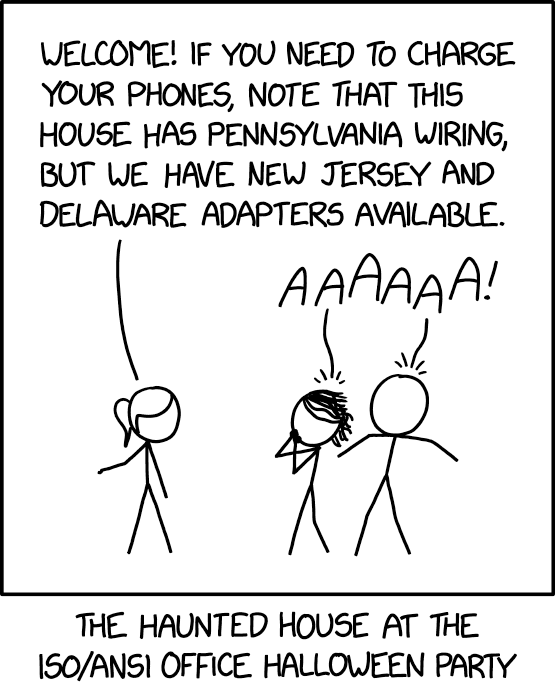





FTFY