

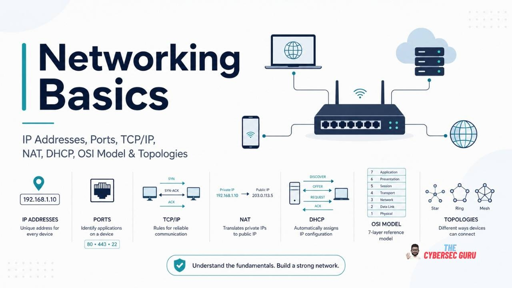
Networking is one of those topics that feels complicated until someone explains the fundamentals clearly. This guide covers the core concepts behind modern computer networks, including IP addressing, MAC addresses, TCP/IP, the OSI model, DNS, DHCP, NAT, routing, switching, ports, and common protocols
1: IPv4 is out of addresses
2: No NAT, which means less firewall/router overhead, and no cgnat to make it impossible to self host without subscribing to outside services
3: Neighbor discovery, prefix delegation, and routing efficiency, which reduces the overhead at the ISP level (less giant router lookup tables is more better for everyone) and lets you subnet your own network without needing to do port forwards
4: Privacy extensions allow computers to use temporary v6 addresses when connecting, that prevent reverse engineering the device hardware address from the ipv6 address
5: link-local address, a private, non-routable ipv6 address every device with ipv6 gets without needing a router, lets you network ipv6 devices on a lan without having to force static addresses or play the dhcp guessing game (see: printers)
6: ipsec built into protocol
7: ipv6 devices have multiple ipv6 addresses on one itnerface (link local, global, global privacy extension, any more you want have at it)